How Contractors Use Portable Power on Remote Job Sites
Contractors use portable power stations to run tools, charge equipment, and maintain productivity on remote job sites where grid power isn’t available or reliable.
typical station capacity
runtime for small tools
continuous output needed
Quick Navigation
Remote construction sites present unique power challenges that can halt productivity and inflate costs. While traditional generators have been the go-to solution, contractors increasingly rely on portable power stations for their versatility, quiet operation, and ability to power sensitive electronics alongside standard tools. These battery-powered units solve the critical gap between full diesel generators and basic extension cords when you need reliable power in locations without grid access.
Remote Construction Power Challenges
Remote job sites face distinct power obstacles that standard electrical solutions can’t address. Grid connections may be months away from installation, temporary service costs can exceed $10,000 per site, and fuel deliveries for generators become logistically complex in isolated areas.
The most common power gaps contractors encounter include:
- Tool charging stations — Battery-powered tools need consistent recharging cycles throughout the workday
- Survey and measurement equipment — Laser levels, transit equipment, and digital measuring tools require clean power
- Communication systems — Site radios, cell boosters, and emergency communication equipment
- Lighting systems — LED work lights for early morning or extended evening work
- Small appliances — Coolers, coffee makers, and basic crew comfort equipment
Traditional generators solve the raw power problem but create secondary issues. Noise restrictions limit operating hours in many areas, fuel storage becomes a security concern, and the exhaust makes indoor or enclosed work impossible. Contractors need power solutions that work in noise-sensitive environments and don’t require constant fuel management.
A typical framing crew burns through 20-30 battery tool charges per day. Without on-site power, that means either bringing pre-charged backup batteries (expensive) or stopping work for charging runs to the nearest grid connection (productivity killer).
Portable Power Remote Job Sites: Common Applications
Contractors deploy portable power stations across five primary use cases, each with specific power requirements and runtime expectations.
Tool Charging and Power
Battery tool ecosystems dominate modern construction, but they create charging bottlenecks on remote sites. A portable power station eliminates the need to rotate crews back to grid power or maintain expensive battery inventories.
Typical tool charging loads include:
- Circular saw chargers: 150-200W per unit
- Impact driver chargers: 100-150W per unit
- Reciprocating saw chargers: 200-250W per unit
- Multi-tool chargers: 80-120W per unit
Most stations can handle 4-6 simultaneous chargers, covering a small crew’s tool rotation. For high-draw corded tools like table saws or miter saws, you need stations with 2,000W+ continuous output and surge capacity for motor startup.
Site Monitoring and Security
Remote sites require security cameras, motion sensors, and communication equipment that must operate 24/7. These systems draw relatively low power but need consistent uptime.
A basic security setup consumes:
- Wireless security cameras: 5-10W each
- Motion sensors: 2-5W each
- Site radios: 10-20W during operation
- Cell signal boosters: 15-30W continuous
Total system load rarely exceeds 100W, making even smaller portable stations viable for multi-day operation with solar supplementation.
Measurement and Survey Equipment
Modern construction relies heavily on electronic measurement tools that require clean, stable power. Laser levels, GPS units, and digital measuring equipment can malfunction with the power quality issues common in portable generators.
Survey equipment power requirements:
- Laser levels: 50-100W during operation
- GPS survey equipment: 20-40W continuous
- Digital measuring tools: 10-30W intermittent
- Laptop computers: 45-65W during use
Temporary Lighting Systems
LED work lights provide job site illumination without the heat and power consumption of traditional work lights. Portable stations can power comprehensive lighting systems for extended periods.
LED lighting power consumption:
- Portable LED work lights: 20-50W each
- LED light strings: 30-60W per 100-foot string
- Temporary area lighting: 100-200W per fixture
| Application Type | Power Draw | Runtime Need | Station Size Required |
|---|---|---|---|
| Tool charging (4-6 tools) | 600-1,200W | 6-8 hours | 2,000Wh minimum |
| Site security system | 50-100W | 24 hours | 1,200-2,400Wh |
| Survey equipment | 100-200W | 8-10 hours | 800-2,000Wh |
| Work lighting | 200-500W | 4-6 hours | 800-3,000Wh |
Sizing Power Requirements for Job Sites
Proper sizing prevents both over-spending on excessive capacity and under-powering critical operations. The calculation process involves identifying peak power demands, daily energy consumption, and surge requirements for motor-driven equipment.
Peak Power Calculation
Start by listing all equipment that might operate simultaneously during peak usage periods. Most contractors find their peak power window occurs during tool charging sessions when multiple battery packs charge simultaneously.
Example peak calculation for a small framing crew:
- 4 × battery chargers @ 150W each = 600W
- 2 × LED work lights @ 40W each = 80W
- 1 × job site radio @ 20W = 20W
- 1 × laptop charging @ 60W = 60W
- Total peak load: 760W
For corded tools, factor in surge requirements. Circular saws and other motor-driven tools require 3-4 times their running wattage for startup. A 1,200W circular saw needs 3,600-4,800W surge capacity, requiring a station rated for at least 2,000W continuous with 4,000W+ surge capability.
Daily Energy Consumption
Calculate total watt-hours needed by estimating runtime for each device. This determines minimum battery capacity requirements.
Example daily consumption calculation:
- Tool charging: 600W × 6 hours = 3,600Wh
- Work lighting: 80W × 4 hours = 320Wh
- Electronics: 80W × 8 hours = 640Wh
- Total daily consumption: 4,560Wh
This calculation reveals the gap between theoretical requirements and practical portable station capacity. Most portable units range from 1,000-4,000Wh, meaning they’re designed for task-specific windows rather than full-day coverage. For extended operation, contractors either rotate multiple units, implement solar charging, or focus on peak-hour power needs.
When daily calculations exceed 6,000Wh, portable stations work best for specific task windows rather than all-day coverage. Plan for charging tool batteries during lunch breaks, running lighting for evening work, or powering critical equipment during peak productivity hours.
Matching Station Capacity to Work Patterns
Rather than sizing for theoretical all-day operation, successful contractors match station capacity to their actual work patterns:
- Morning tool prep: 1-2 hour charging session for day’s battery rotation
- Midday equipment power: Survey tools, measurement equipment during active work
- Evening lighting: 2-4 hours of work light operation for extended days
- Overnight security: Low-power monitoring systems through the night
Portable Stations vs Traditional Generators
The choice between portable power stations and traditional generators depends on job site requirements, noise restrictions, and power demands. Each solution excels in different scenarios.
Power Output Comparison
Traditional generators deliver higher peak power at lower cost per watt. A 3,000W generator costs $300-600, while a 3,000W portable station costs $2,000-4,000. However, the station provides clean power suitable for electronics and operates silently.
Generator advantages:
- Higher continuous power output (3,000-10,000W+)
- Lower cost per watt of capacity
- Unlimited runtime with fuel supply
- Better for heavy power tools and equipment
Portable station advantages:
- Silent operation for noise-sensitive areas
- Clean power safe for electronics and sensitive equipment
- No exhaust emissions for indoor or enclosed work
- Instant startup without warm-up time
- No fuel storage or theft concerns
Operating Cost Analysis
Generators require fuel, oil changes, and regular maintenance. Portable stations have minimal ongoing costs but higher upfront investment.
Annual operating costs for 1,000 hours of operation:
- 3,000W generator: $400 fuel + $100 maintenance = $500
- 3,000W portable station: $50 electricity (charging) = $50
The station pays for itself through operating cost savings over 3-5 years, assuming regular use. For occasional use, generators remain more cost-effective.
Deployment Flexibility
Portable stations excel in applications where generators face restrictions or limitations:
- Indoor work: No emissions allow safe operation inside buildings
- Noise-sensitive locations: Residential areas, hospitals, schools
- Multi-shift operations: Silent charging between shifts
- Emergency power: Instant startup for critical equipment
Solar Charging for Extended Operations
Solar panels extend portable station runtime by recharging batteries during daylight hours. This combination creates self-sustaining power systems for remote sites without fuel deliveries or grid connections.
Solar Panel Sizing
Match solar panel capacity to daily station consumption and available sunlight hours. Most construction sites receive 4-6 peak sun hours per day, requiring panels sized at 150-200% of daily consumption for complete recharging.
For a 2,000Wh station with 1,500Wh daily consumption:
- Required solar input: 1,500Wh ÷ 5 hours = 300W minimum
- Recommended solar capacity: 400-500W (adding 33-67% buffer for efficiency losses and weather variability)
- Panel configuration: 2 × 250W portable panels
Portable vs Fixed Solar Systems
Construction sites often require portable solar solutions that move with work crews. Fixed installations work better for long-term job sites with established base camps.
Portable solar advantages:
- Moves with work crews to optimal sun exposure
- Theft deterrent when stored with other equipment
- No permanent installation required
- Adjustable angle for seasonal sun optimization
Portable solar considerations:
- Setup and breakdown time each day
- Weather protection and storage requirements
- Cable management and connection durability
- Weight and transportation logistics
System Integration
Modern portable stations include built-in solar charge controllers, simplifying panel connections. Match panel voltage to station requirements and use MC4 connectors for reliable outdoor connections.
Essential integration components:
- Solar panels with MC4 output connectors
- Weather-resistant extension cables
- Portable panel mounting stands or brackets
- Cable management and protection systems
Real-World Deployment Strategies
Successful portable power deployment requires matching equipment to specific job site workflows and crew patterns. These proven strategies help contractors maximize productivity while controlling costs.
Crew Size and Equipment Scaling
Match portable power capacity to crew size and tool inventory. Small crews (2-4 people) operate efficiently with single 2,000-3,000Wh stations. Larger crews require multiple stations or higher-capacity units.
Scaling recommendations:
- 2-4 person crew: Single 2,000Wh station with 1,500W output
- 5-8 person crew: Two 2,000Wh stations or one 4,000Wh unit
- 8+ person crew: Multiple stations positioned at work zones
Site Layout and Power Distribution
Position portable stations to minimize extension cord runs and maximize accessibility. Central locations work for small sites, but distributed power reduces cord trips and voltage drop on large projects.
Distribution strategies:
- Central power hub: Single station with multiple outlet strips
- Zone-based power: Stations positioned at major work areas
- Mobile power: Wheeled stations that move with work crews
Charging and Rotation Schedules
Establish charging schedules that align with work patterns and break times. Tool battery charging during lunch breaks maximizes afternoon productivity without interrupting workflow.
Effective scheduling patterns:
- Morning prep: Pre-work tool charging (30 minutes)
- Lunch rotation: Major charging session (60 minutes)
- End-of-day: Station recharging and prep for next day
Weather Protection and Site Durability
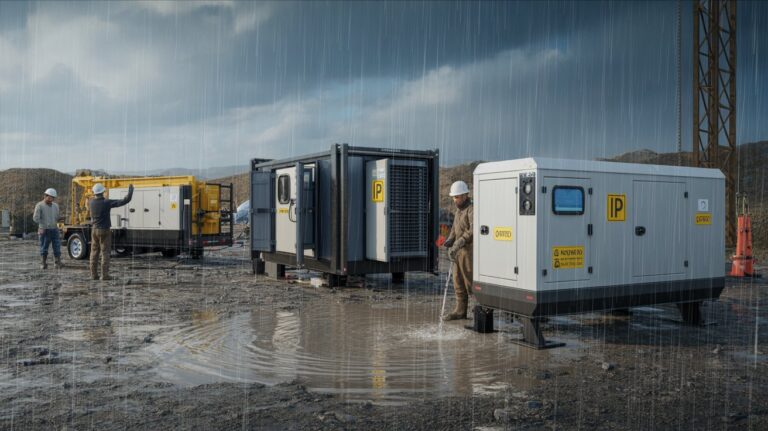
Outdoor job sites expose portable power stations to harsh conditions that can damage electronics and reduce lifespan. Proper weatherproofing and protection strategies ensure reliable operation in challenging environments.
Essential weather protection measures:
- IP rating requirements: Look for stations with IP54 or higher ratings for dust and water resistance
- Protective enclosures: Use weatherproof storage boxes or job site containers for overnight protection
- Ventilation considerations: Ensure adequate airflow around stations to prevent overheating during operation
- Temperature management: Avoid direct sunlight and extreme cold that can affect battery performance and lifespan
Site durability strategies:
- Elevated placement: Keep stations off ground level to avoid water damage and debris
- Secure mounting: Use theft-resistant anchoring for permanent installations
- Cable protection: Use cord covers and protective conduit for outdoor connections
- Regular maintenance: Clean air vents and check connections weekly in dusty environments
Key Takeaways
- Size portable power stations based on peak simultaneous loads rather than total daily consumption
- Factor in 3-4x surge capacity for motor-driven tools like circular saws and compressors
- Use portable stations for task-specific windows rather than all-day coverage when daily needs exceed 6,000Wh
- Solar integration extends runtime but requires 400-500W panels for complete daily recharging
- Multiple smaller stations often work better than single large units for crew flexibility and equipment security
Frequently Asked Questions
How long will a 2,000Wh portable power station run construction tools?
A 2,000Wh station will run tool chargers for 6-8 hours, power LED work lights for 10-12 hours, or operate small electronics for 15-20 hours. For high-draw tools like circular saws, expect 1-2 hours of intermittent use depending on cutting load and motor efficiency.
Can portable power stations handle tool surge requirements?
Quality portable stations provide 2-4 times their continuous rating for surge loads. A 1,500W continuous station typically handles 3,000-6,000W surges for motor startup, sufficient for most cordless tool chargers and smaller corded tools like circular saws.
What’s the difference between portable stations and traditional generators for job sites?
Portable stations operate silently, produce clean power safe for electronics, and require no fuel or maintenance. Generators provide higher power output at lower cost but create noise, emissions, and require regular fuel supply and maintenance.
How do I size solar panels for portable power station charging?
Size solar panels at 150-200% of daily power consumption. For a station consuming 1,500Wh daily, install 400-500W of solar panels to account for efficiency losses and variable sunlight conditions. Most construction sites receive 4-6 peak sun hours daily.
Are portable power stations worth the cost compared to generators?
For contractors working in noise-sensitive areas, requiring clean power for electronics, or needing indoor operation capability, portable stations justify their higher upfront cost through operational flexibility and lower ongoing costs. Pure power-per-dollar, generators remain more economical.
Ready to power your remote construction projects? Explore our comprehensive guides on portable power solutions and sizing calculators to find the right setup for your specific job site requirements.