Power Station Runtime: How to Calculate How Long It Will Actually Last on a Job Site
Power station runtime on a job site depends on battery capacity, tool load, efficiency losses, surge requirements, temperature, and how many devices run at the same time. This guide gives you the exact calculation method so you can estimate real-world runtime before you buy, deploy, or rely on a portable power station in the field.
Inverter efficiency factor to apply to all AC runtime calculations
Typical startup surge range for motor-driven tools — verify starting watts before sizing
Rule-of-thumb threshold where many single portable stations shift from full-shift coverage to task-window use
A bad runtime estimate can kill a job site before lunch. Calculating power station runtime accurately is the difference between a productive shift and a dead battery at 10 a.m. The core math is straightforward — battery capacity divided by load equals runtime — but on a real job site, three variables crush that number fast: inverter efficiency losses, motor surge draw, and the reality that you’re almost never running just one tool.
This guide walks through the full calculation method so you can size your power station correctly, set realistic expectations, and avoid expensive surprises on site. Whether you’re powering lights, chargers, laptops, saws, pumps, or compressor loads, the goal is the same: know your usable energy before the work starts.
The Core Runtime Formula
Every portable power station runtime calculation starts with the same equation:
Runtime (hours) = Battery Capacity (Wh) ÷ Load (W)
If you want to skip the manual math, use our jobsite power calculator to estimate your total tool load, or use the battery sizing estimator to work backward from your required runtime.
A 2,000Wh station powering a 400W continuous load would theoretically run for 5 hours. A 1,000Wh station powering the same load would last 2.5 hours. That’s the textbook version. But “textbook” and “job site” are different environments.
Before you do any math, you need three numbers:
- Battery capacity in watt-hours (Wh) — found on the spec sheet. Do not confuse amp-hours (Ah) with watt-hours. If the station is rated in Ah, multiply by voltage: Ah × V = Wh.
- Continuous power draw of your load in watts (W) — the actual running wattage of everything plugged in, not the surge or peak figure.
- Efficiency factor — because no power station delivers 100% of its stored energy to your tools. More on this below.
Get those three numbers right and the formula becomes useful. Miss any one of them and your runtime estimate will be off — usually on the optimistic side, which is the wrong direction when you’re on a job site with no grid backup.
Efficiency Losses You Cannot Ignore
A power station rated at 2,000Wh will not deliver 2,000Wh of usable AC power to your tools. Energy is lost during inverter conversion, internal battery management, heat generation, cable resistance, and real-world load conditions.
Inverter efficiency is the biggest single loss factor for AC tool loads. Most quality portable power stations operate around 85–92% inverter efficiency under moderate loads. At high loads approaching the inverter’s rated ceiling, efficiency can drop further. For conservative job site planning, use 0.85 as your inverter efficiency factor.
The corrected formula — accounting for inverter efficiency — becomes:
Runtime (hours) = (Battery Capacity × 0.85) ÷ Continuous Load (W)
For a 2,000Wh station running a 400W load:
(2,000 × 0.85) ÷ 400 = 4.25 hours — not 5.
That 45-minute gap matters on a long shift. Additional factors that reduce usable capacity beyond inverter losses:
- Temperature: Lithium battery capacity drops in cold conditions. Below 32°F (0°C), usable capacity can fall meaningfully, especially under heavier loads. If you’re working in winter conditions, reduce your effective capacity by another 10–15% for conservative planning.
- Age and cycle count: Batteries lose capacity over their charge cycle life. An older station may no longer hold its full rated capacity. Factor this in if you’re working with heavily used units.
- High-load sag: Running the inverter near its rated limit causes additional heat and efficiency loss. If your load is consistently above 80% of the inverter’s capacity, add another margin to your estimate.
For conservative jobsite planning, apply two separate factors to nameplate capacity. First, multiply by 0.85 to account for real inverter efficiency losses — this is physics, not a buffer. Then multiply by 0.80 as a planning margin that covers battery age, temperature effects, and unexpected load spikes. These are two distinct adjustments, not the same thing counted twice. Together they give you a realistic usable energy figure for field planning.
Applying both factors to a 2,000Wh station:
Usable planning capacity = 2,000 × 0.85 × 0.80 = 1,360Wh
The complete conservative field formula is:
Runtime (hours) = (Battery Capacity × 0.85 × 0.80) ÷ Continuous Load (W)
That 1,360Wh figure — not the 2,000Wh on the label — is the number you should use for all job site runtime planning from this point forward.
Surge vs. Continuous: Why Motor Tools Change Everything
Power station runtime calculations use continuous wattage for the runtime math. But the inverter capacity you need is determined by surge wattage — and these two numbers are very different for motor-driven tools.
When an electric motor starts, it can pull several times its running wattage for a short moment. Many jobsite motor loads fall around 3–7× running watts at startup, depending on motor type, load, cord length, tool design, and whether the tool has soft-start electronics. This startup surge is brief, but it must stay within the station’s peak inverter output or the station may fault, trip, or shut down until the overload condition is cleared.
Common job site tools and estimated surge multipliers for planning only:
| Tool | Typical Running Watts | Estimated Surge Multiplier | Estimated Surge Peak |
|---|---|---|---|
| 7-1/4″ Circular Saw | 1,400W | 3× | 4,200W |
| Air Compressor (1HP) | 1,000W | 4× | 4,000W |
| Angle Grinder (4.5″) | 900W | 3× | 2,700W |
| Hammer Drill | 700W | 3× | 2,100W |
| Reciprocating Saw | 1,100W | 3× | 3,300W |
| Portable Job Site Light (LED) | 150W | 1× | 150W |
| Battery Charger (18V/20V platform) | 100–200W | 1.2× | 240W |
The rule: Your power station’s peak inverter rating must exceed the highest single-tool surge draw you plan to run. Your power station’s continuous inverter rating must handle the sum of all running loads used at the same time.
A station with a 2,000W continuous / 4,000W peak inverter is a borderline match for a circular saw with an estimated 4,200W surge. Some tools may start; others may trip the unit depending on blade load, cord length, battery state, and inverter design. For circular saws, compressors, pumps, and miter saws, stepping up to a station with extra peak-output margin is the safer job site decision.
One additional consideration for active job sites: if two motor-driven loads — such as a compressor cycling back on while a saw is starting — could surge at the same time, add their surge draws together when sizing your peak inverter requirement. The single-highest-device rule applies when tools start independently; when simultaneous starts are possible, plan for the combined surge.
For runtime calculation purposes, use the continuous running wattage — not the brief surge figure. Surge determines compatibility. Continuous load determines runtime.
Calculating Simultaneous Tool Loads
The single biggest mistake contractors make when calculating power station runtime is treating one tool at a time. On an active job site, you’re almost always running multiple loads simultaneously. Here’s how to build an accurate load profile:
Step 1: List every device that will be plugged in at the same time.
Step 2: Record the continuous running wattage of each device.
Step 3: Sum them for your total continuous load.
Step 4: Identify the single device with the highest surge rating — that’s your baseline peak surge requirement. If two motor loads could realistically start at the same moment, add their surge draws together instead.
Step 5: Apply the full conservative runtime formula against the total continuous load.
Example load profile — framing crew, 4 workers:
| Device | Running Watts | Hours of Use Per 8hr Shift | Wh Consumed |
|---|---|---|---|
| Circular Saw (intermittent) | 1,400W | 2.5 hrs active | 3,500Wh |
| Air Compressor (cycling) | 1,000W | 3 hrs active | 3,000Wh |
| Battery Charger Bank (×2) | 350W | 6 hrs | 2,100Wh |
| Job Site LED Light | 150W | 8 hrs | 1,200Wh |
| Total | — | — | 9,800Wh |
This framing crew needs approximately 9,800Wh of actual energy across a full 8-hour shift. Applying the full conservative formula — dividing by both the 0.85 inverter efficiency factor and the 0.80 planning margin — the required nameplate battery capacity is roughly 14,400Wh (9,800 ÷ 0.68). That number makes it immediately clear why a single portable station cannot cover this crew for a full day.
A full-shift calculation above 6,000Wh usually means a single portable power station is covering task windows, not the entire day. Plan for scheduled recharge windows, solar supplementation, a second unit, or grid top-up during breaks. This is normal — it doesn’t mean portable power won’t work. It means you need a realistic deployment plan.
Real-World Runtime Examples by Job Type
The following examples apply the full methodology — inverter efficiency (0.85), planning margin (0.80), surge requirement, and realistic duty cycles — to common job site scenarios.
Scenario 1: Inspection and Documentation (Light Load)
Load: Laptop (65W) + LED work light (60W) + phone charging (18W) = 143W continuous
Station: 1,000Wh portable power station
Usable planning capacity: 1,000 × 0.85 × 0.80 = 680Wh
Runtime: 680 ÷ 143 = 4.75 hours
Verdict: A 1,000Wh station handles a half-day inspection load comfortably. For a full day, step up to 2,000Wh or plan a solar recharge at lunch.
Scenario 2: Finish Carpentry (Medium Load)
Load: Miter saw running (1,800W continuous, 5,400W surge at 3×) + LED job light (150W) + battery charger (150W) = 2,100W continuous
Peak surge requirement: 5,400W — needs a station with at least 5,400W peak inverter output
Station: 3,000Wh station with 5,500W peak inverter
Usable planning capacity: 3,000 × 0.85 × 0.80 = 2,040Wh
Active cutting time at 2,100W: 2,040 ÷ 2,100 = ~1 hour of full simultaneous load
Verdict: A 3,000Wh station covers a morning session of finish carpentry. The miter saw will not run continuously in most real workflows, so real duty cycle with rest periods can extend practical runtime to 2.5–3 hours between charges.
Scenario 3: Remote Pump Operation (Sustained Load)
Load: 1HP transfer pump (1,000W continuous, 4,000W surge at 4×)
Peak surge requirement: 4,000W peak — needs a station with 4,000W+ peak inverter
Station: 2,000Wh station with 4,500W peak inverter
Usable planning capacity: 2,000 × 0.85 × 0.80 = 1,360Wh
Runtime: 1,360 ÷ 1,000 = 1.36 hours of continuous pumping
Verdict: For extended pump operations, plan on a larger battery system, scheduled recharge, or two stations in rotation. A single 2,000Wh unit buys roughly 80 minutes of pump time under this load profile.
Recommended Power Station Capacity Classes
Once you calculate your load profile, the next step is choosing the right capacity class. This is where runtime math turns into a buying decision. The right power station is not just the one with the biggest battery — it is the one that matches your actual load, surge requirement, recharge access, and shift length.
| Capacity Class | Best For | Typical Job Site Role |
|---|---|---|
| 500–1,000Wh | Phones, laptops, inspection gear, small LED lights | Light-duty support power |
| 1,000–2,000Wh | Battery chargers, work lights, documentation setups, low-draw tools | Half-day light job site power |
| 2,000–3,600Wh | Chargers, lights, intermittent saw use, small pumps, mobile crews | Task-window power for active work |
| 3,600–6,000Wh | Medium-duty crews, higher inverter loads, repeated tool use | Extended work blocks with recharge planning |
| 6,000Wh+ | Expandable systems, compressor-heavy work, pump operations, multi-worker sites | Full-shift planning or hybrid job site power |
For light inspection work, a compact 1,000Wh station may be enough. For tool charging and lighting, 2,000Wh is a more realistic starting point. For saws, pumps, compressors, or multi-worker setups, the decision usually shifts toward 3,000Wh+ stations, expandable battery systems, or multiple units in rotation.
If your calculated daily energy demand is under 2,000Wh, a single portable station can often cover the job. If your demand is 2,000–6,000Wh, focus on inverter output, recharge speed, and duty cycle. If your demand is above 6,000Wh, treat the station as part of a larger power system rather than a standalone generator replacement.
When One Station Isn’t Enough
If your power station runtime calculation lands above 6,000Wh for the day, a single portable unit is usually covering task windows — not your full shift. That’s not a failure; it’s just the physics of portable battery capacity, inverter load, and heavy tool demand. Here’s how professionals handle it:
Option 1: Scheduled recharge windows. Charge the station during lunch or downtime using a generator, grid connection, or high-output solar array. A quality 2,000Wh station that accepts high input can recover a meaningful amount of capacity during a 60–90 minute break, depending on charger speed and available input power.
Option 2: Multiple units in rotation. Two 2,000Wh stations in rotation — one working, one charging — effectively increases your available energy budget and reduces downtime. This approach suits sustained high-draw applications like compressors, saws, and battery charger banks.
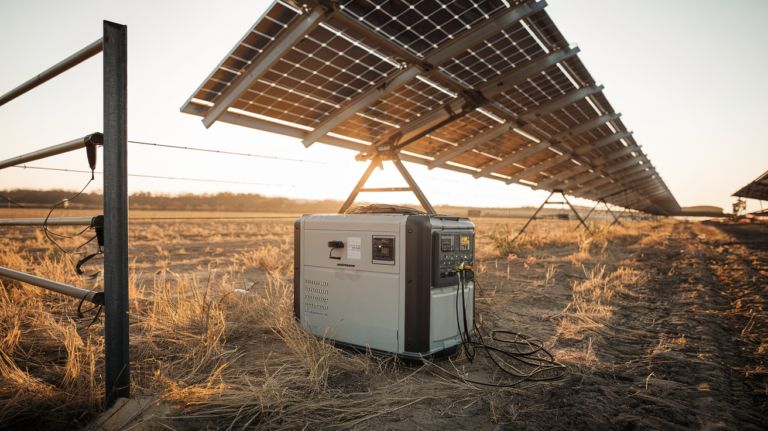
Option 3: Solar supplementation. A 400W solar array feeding a 2,000Wh station may add roughly 1,600–2,000Wh per day in strong sun with 4–5 peak sun hours. In partial shade or overcast conditions, budget much less. Solar extends runtime but cannot replace a large battery for high-draw tools. It works best for light loads like lights, chargers, laptops, and background equipment.
Option 4: Step up to a higher-capacity expandable unit. Some stations in the 3,000–5,000Wh class accept add-on battery packs that push usable capacity above 10,000Wh. These are the right tool if your job site runs consistent high-draw loads across a full 8-hour shift without grid access.
Understanding power station runtime means knowing when to use the right tool for the right window — not expecting a portable station to replace a gas generator indefinitely at heavy loads. For guidance on specific capacity classes and real-world applications, browse our job site power solutions and power station buying guides.
Key Takeaways
- Always apply the inverter efficiency factor (0.85) to nameplate capacity before calculating runtime. Nameplate capacity is not the same as usable AC output.
- Apply a separate 0.80 planning margin on top of the efficiency factor to cover battery age, temperature effects, and unexpected load spikes. These are two distinct adjustments — not the same loss counted twice.
- The full conservative field formula is: Runtime = (Capacity × 0.85 × 0.80) ÷ Total Continuous Load.
- Identify motor-driven tools and estimate startup surge carefully. Many jobsite motor loads can require 3–7× their running wattage at startup, so verify starting watts whenever possible before sizing the station’s peak inverter rating.
- If two motor loads could start simultaneously, add their surge draws together — don’t size for just the single highest device.
- Never size the inverter to continuous load alone. Surge determines whether the tool can start; continuous load determines how long the station will run.
- Build a full load profile for simultaneous use — not individual tools in isolation — to get an accurate continuous wattage figure for your runtime formula.
- If your shift calculation exceeds 6,000Wh, plan for scheduled recharge, multiple units, expandable batteries, or solar supplementation.
- Cold temperatures can reduce usable capacity. Factor this in for winter job sites, early-morning starts, or outdoor storage.
Frequently Asked Questions
How do I calculate power station runtime for my job site?
Use the conservative field formula: Runtime (hours) = (Battery Capacity in Wh × 0.85 × 0.80) ÷ Total Continuous Load in Watts. The 0.85 factor accounts for real inverter efficiency losses. The 0.80 factor is a separate planning margin for battery age, temperature, and unexpected load spikes. Divide the result by the sum of all devices running simultaneously. This gives you a realistic job site runtime figure — not the theoretical maximum printed on the label.
Why does my power station run out faster than the rated hours suggest?
Rated runtime figures on many power station marketing materials assume a single light load, often 100–200W. On a job site, you’re usually running multiple tools, chargers, and lights at the same time. Inverter conversion losses, cold weather capacity reduction, battery age, and high-load efficiency sag can all reduce usable runtime below the theoretical number. Always calculate against your actual simultaneous load, not just the product’s marketing claim.
How does surge wattage affect power station runtime calculations?
Surge wattage determines which station you can use, not how long it will run. The surge draw of motor-driven tools can be several times the running wattage — often around 3–7× depending on motor type, load, cord length, and tool design — and must stay within the station’s peak inverter rating. If the surge peak exceeds the station’s peak output, the unit may fault, trip, or shut down. Runtime calculations use the continuous running wattage, not the brief surge figure. Size for surge to confirm compatibility; calculate runtime from continuous load.
Can I extend power station runtime with solar panels on a job site?
Yes, but with realistic expectations. A 400W solar array in strong sun with 4–5 peak sun hours can add roughly 1,600–2,000Wh of charge in a day. In partial shade or overcast conditions, expect much less. Solar works best as a background top-up for lighter loads like LED lights, battery chargers, laptops, and communication gear. For heavy motor tools drawing 1,000W or more, solar input usually cannot keep pace with discharge rates by itself.
What size power station do I need for a full 8-hour job site shift?
That depends entirely on your load profile. A light documentation or inspection setup drawing around 150W continuously needs roughly 1,800Wh of nameplate capacity for 8 hours after applying both the inverter efficiency factor and planning margin (150W × 8hr = 1,200Wh consumed ÷ 0.68 = ~1,765Wh required). A framing or finish carpentry crew with saws, compressors, lights, and chargers can easily need 14,000Wh or more across a full shift. At that level, you need multiple stations, expandable battery systems, solar supplementation, or a hybrid approach with scheduled recharge.
Need help matching your job site load profile to the right power station capacity? Use our calculators to estimate your total jobsite load, battery size, and realistic runtime before choosing a portable power station.