Best Jobsite Power Stations for Contractors: Silent Gas Generator Alternatives That Work
Portable power stations have matured into legitimate jobsite generator alternatives — silent, fuel-free, and capable of running real contractor loads. This guide breaks down what contractors and site managers need to know before replacing (or supplementing) a gas generator with battery power on a commercial or residential jobsite.
3,000WAC output on leading contractor power stations
25dBNoise level at 600W load — comparable to a whisper at 1 meter
43 min0–80% recharge time (EcoFlow DELTA 3 Max Plus via AC)
Contents
- Why Contractors Are Switching to Battery Power Stations
- What to Look for in a Jobsite Power Station
- Sizing Your Load: How Much Power Do You Actually Need?
- Best Jobsite Power Stations for Contractors
- Real-World Limitations: When Battery Power Isn’t Enough
- Frequently Asked Questions
The best jobsite power stations for contractors are no longer a compromise — they’re a direct gas generator alternative for a growing list of real site tasks. If you’ve priced out generator fuel costs, noise complaints from neighboring properties, permit headaches in urban environments, or tool damage from dirty power, you already know why this category is worth a serious look. This guide is built for contractors and site managers who need to make a real buying decision, not a hobbyist weekend camper looking for a backup battery. We’ll cover sizing, what specs actually matter on a worksite, and which units are worth loading onto your truck.
Why Contractors Are Switching to Battery Power Stations
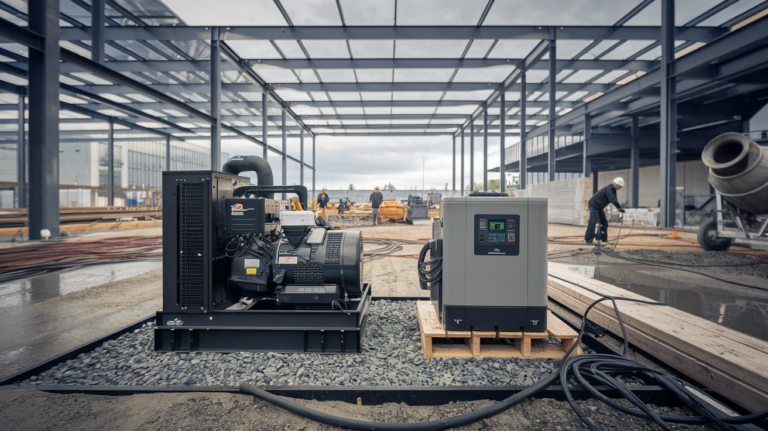
Gas generators have three problems that don’t get better over time: fuel logistics, maintenance cycles, and noise. On an urban infill project or a renovation inside an occupied building, a gas generator creates real operational friction — carbon monoxide risk indoors, noise ordinance exposure, and fuel storage compliance. A battery-based jobsite power station eliminates all three of those variables.
The technology shift that made this practical is LiFePO4 (lithium iron phosphate) battery chemistry. Unlike older lithium-ion packs, LiFePO4 handles deep discharge cycles gracefully — Jackery’s Explorer 2000 Plus is rated for 4,000 cycles to 70% capacity, which translates to over a decade of daily use before meaningful degradation. Pair that with pure sine wave AC output (important for sensitive electronics and variable-speed tools — more on that below) and you have a unit that protects your tools rather than shortening their lifespan.
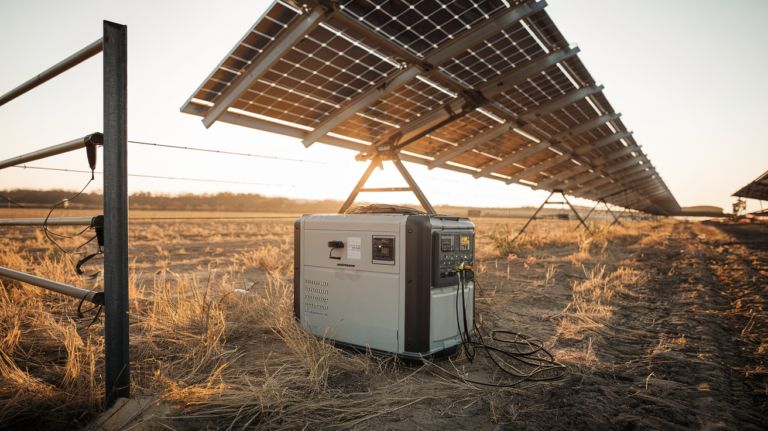
The cost math is also shifting. Fuel, oil, spark plugs, carburetor cleaning — a gas generator that sees heavy use has real ongoing costs. A battery station’s “fuel” is electricity, rechargeable from your truck’s 120V outlet, a job trailer, or solar panels during the day. For contractors running multi-week projects, that difference adds up.
Noise Compliance Note
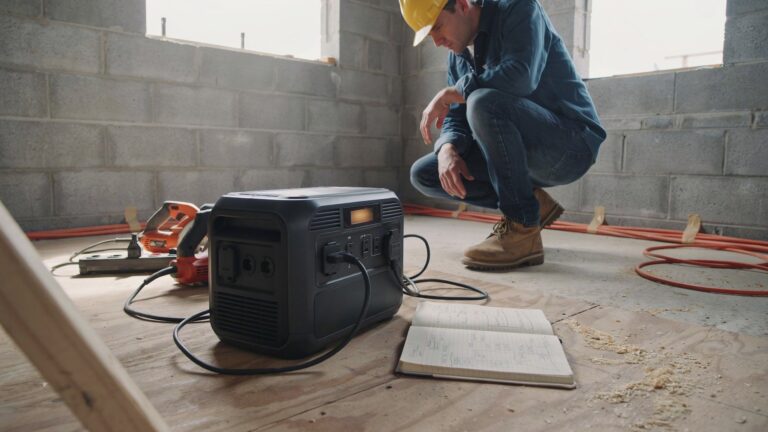
Many municipalities and residential HOAs enforce noise ordinances that limit construction equipment to 85 dB or less at the property line. A gas generator at typical load runs 65–85 dB at 7 meters. A battery power station like the EcoFlow DELTA 3 Max Plus operates at 25 dB under load — a difference that eliminates most noise complaints before they start.
What to Look for in a Jobsite Power Station
Not every spec on a power station’s marketing sheet matters on a construction site. Here’s what actually does:
Continuous AC Output (Watts)
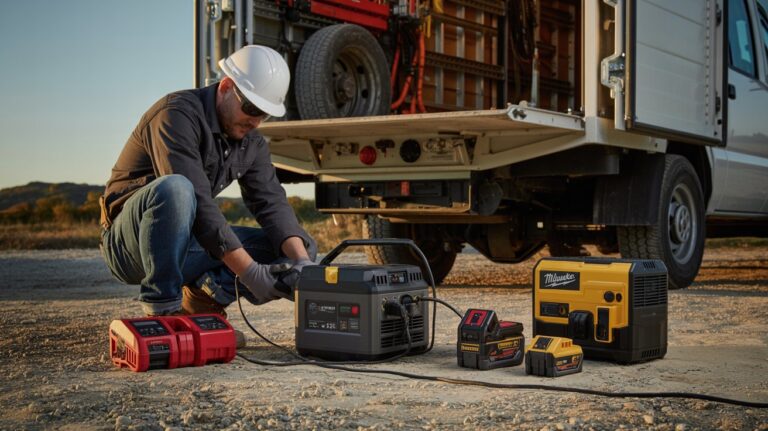
This is the number you size your loads against. Most professional-grade contractor power stations sit at 2,000–3,000W continuous. That’s enough for circular saws, drills, rotary hammers, lighting, and battery chargers simultaneously — but you need to add up your actual concurrent draw, not just assume you’re covered.
Surge Capacity
Motor-driven tools — circular saws, air compressors, rotary hammers — draw 3x–4x their rated wattage for the first fraction of a second on startup. A station rated at 3,000W continuous should carry a 6,000W surge rating to handle real contractor tool loads. If a unit only shows a continuous wattage with no surge spec, treat it as a red flag for construction use.
Battery Chemistry
LiFePO4 is the correct chemistry for jobsite use. It handles heat better than standard lithium-ion, tolerates partial charge cycles without memory degradation, and carries a significantly higher cycle count. For a unit that’s going on a truck daily, chemistry matters more than it does for a backup unit sitting in a garage.
Recharge Speed
A power station that takes 8–10 hours to recharge is effectively a single-shift tool. For multi-day projects without grid access, recharge speed determines whether you’re managing one unit or need two in rotation. Look for units that support 1,000W+ AC input charging — the difference between a 43-minute 0–80% charge and a 6-hour overnight recharge is operationally significant.
Expandability
Some units support additional battery modules that stack onto the base unit via a proprietary connection. This is worth prioritizing if your projects vary widely — you can run a single 2kWh unit for light-duty days and add modules for heavier loads or longer task windows.
Pure Sine Wave Output
All serious contractor power stations ship with pure sine wave inverters. This matters for variable-speed tools, brushless motor tools, and any electronics with sensitive power supplies. For a deeper breakdown of why this matters, see our comparison of pure sine wave vs. modified sine wave inverters for power tools.
IP Rating and Outdoor Durability
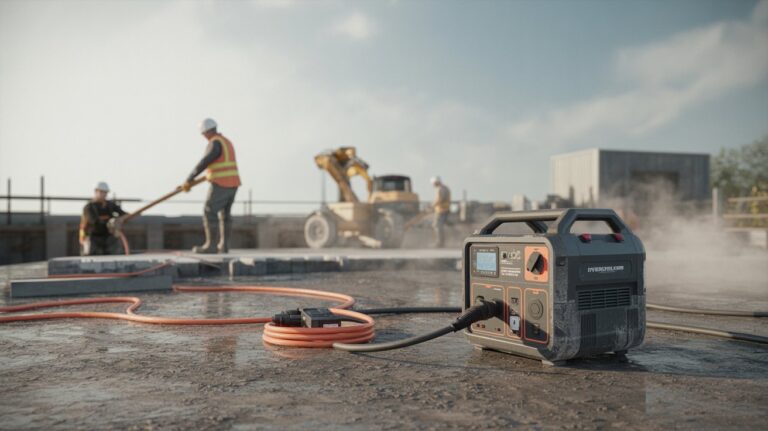
Most portable power stations are not rated for continuous outdoor exposure. Verify the manufacturer’s IP rating before deploying any unit in exposed conditions — rain, dust, and direct moisture are real risks on active jobsites. Using under-rated or uncertified equipment on a commercial jobsite can create warranty, safety, compliance, and insurance review problems if the equipment fails or contributes to an incident. For temporary outdoor use in wet conditions, look for IP54 or higher as a minimum threshold — neither unit reviewed in this guide carries a rating for direct rain exposure, so both require sheltered deployment. For commercial jobsite buyers, also verify applicable safety listings and manufacturer documentation for your intended use case — indoor, temporary outdoor, or outdoor.
Sizing Your Load: How Much Power Do You Actually Need?
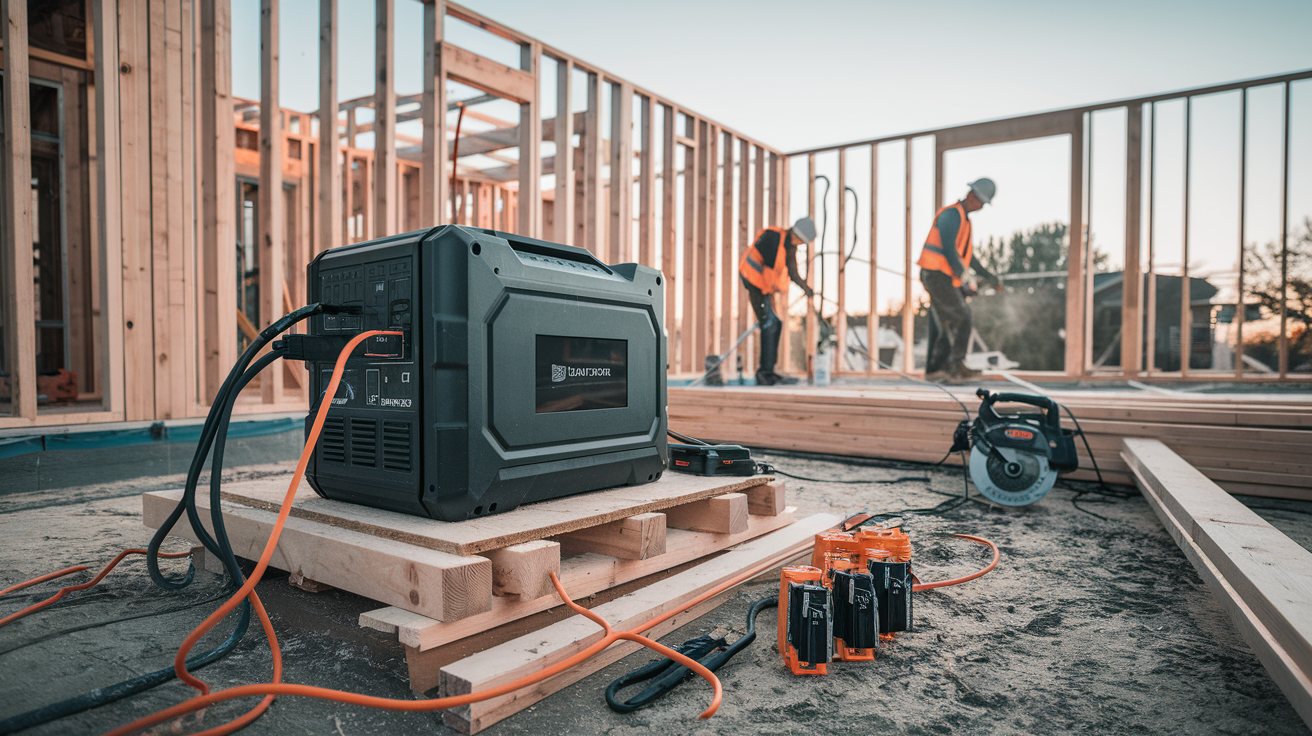
The most common mistake contractors make when evaluating a jobsite power station is sizing against continuous wattage alone. Here’s a realistic sizing example for a two-person framing crew:
| Tool | Running Watts | Startup Surge (3x–4x) |
|---|---|---|
| Circular saw (15A) | 1,440W | 4,320W–5,760W |
| Rotary hammer (8.5A) | 816W | 2,448W–3,264W |
| Dual battery charger station | 300W | 300W (no motor) |
| LED work lighting (2x) | 100W | 100W |
| Total concurrent running | 2,656W | Up to 5,760W surge |
In this scenario, you need a station with at least 2,700W continuous output and a surge capacity of at least 5,760W. A 3,000W continuous / 6,000W surge unit handles this load with margin. A 2,000W / 4,000W surge unit does not — the circular saw startup surge alone will likely trip the inverter protection.
For runtime: running 2,656W continuously from a 2,048Wh battery gives you roughly 46 minutes of full concurrent load. In practice, a two-person crew won’t run all tools simultaneously — realistic duty cycles for framing tools are intermittent, not continuous. A 2,048Wh station can reasonably cover a 2–3 hour task window for a crew of this size before recharge is needed.
Use our Jobsite Power Calculator to size your specific tool load, or run your battery capacity against shift length with the Battery Runtime Calculator.
If your math shows requirements above 6,000Wh for a full shift, be clear-eyed about what a single portable station can cover: task windows, not full-day uninterrupted operation. Full-day coverage requires multiple units in rotation, scheduled grid recharge during breaks, or solar supplementation. See our detailed breakdown of power station runtime on job sites for more on managing multi-unit setups.
Best Jobsite Power Stations for Contractors
Two units stand out in the 2,000–3,000W class that serious contractors are actually deploying.
EcoFlow DELTA 3 Max Plus — Best for Fast Recharge Cycles
The EcoFlow DELTA 3 Max Plus delivers 2,048Wh base capacity expandable to 10kWh with add-on batteries, and outputs 3,000W AC continuous with a 6,000W surge — the minimum spec we’d recommend for a two-person contractor crew running motor-driven tools. What separates this unit from most competitors is its recharge speed: 0–80% in 43 minutes via AC. For a single-shift jobsite with grid access during lunch, that means one unit can cover a full 8-hour day if you’re disciplined about recharge windows.
The X-Boost mode is worth noting — it uses power management to run appliances rated up to 3,800W from a 3,000W inverter by smoothing the load curve. For tools at the edge of the power envelope, that extra headroom matters. At 48.7 lbs, it’s truck-portable without a dolly for most contractors. The 25dB noise level at load is genuinely quiet — indoor renovation work and occupied-building scenarios become viable. The 5-year warranty is the strongest in its class.
Jackery Explorer 2000 Plus — Best for Solar-Heavy or Multi-Day Sites
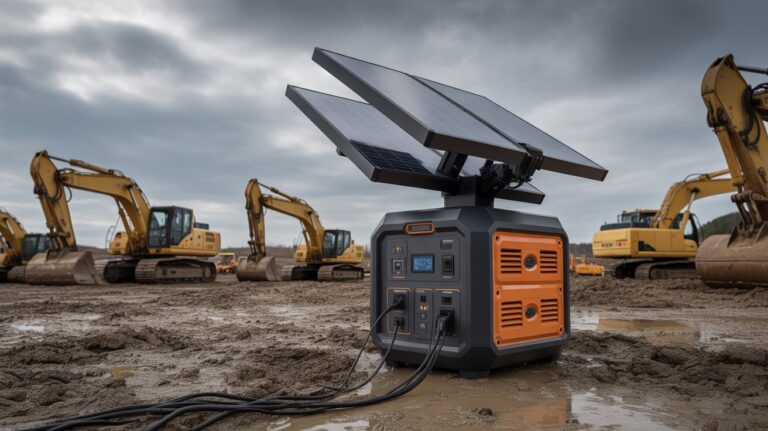
The Jackery Explorer 2000 Plus matches the DELTA 3 Max Plus on paper for continuous and surge output (3,000W / 6,000W) and nearly matches on base capacity at 2,042.8Wh. Its standout spec for remote or multi-day sites is solar input: 1,400W of solar acceptance means you can charge from a realistic 6-panel array in 2–3 hours of good sunlight. The 2–3 hour solar recharge estimate assumes a multi-panel array at or near the 1,400W solar input maximum — a single 200W panel will take significantly longer. Expandable to 24kWh via additional battery packs, it’s the right choice for projects where grid recharge isn’t available every night.
The LiFePO4 chemistry at 4,000 cycles is the highest-rated longevity spec in this class — if you’re amortizing this purchase over a fleet of tools with a 5–7 year equipment cycle, the degradation curve is genuinely favorable. At 61.5 lbs it’s heavier than the EcoFlow unit, which matters if you’re moving it in and out of a truck bed solo. Charge time via AC is approximately 2 hours — slower than the DELTA 3 Max Plus, which is the primary trade-off.
Which Unit Fits Your Workflow?
If you have grid access daily and run intensive but intermittent loads, the EcoFlow DELTA 3 Max Plus’s fast recharge gives you more operational flexibility from a single unit. If your projects are remote, extend beyond a day without grid hookup, or you’re building a solar-supplemented setup, the Jackery Explorer 2000 Plus’s solar input capacity and expandability to 24kWh make it the better long-term platform.
Real-World Limitations: When Battery Power Isn’t Enough
A jobsite power station is not a universal gas generator replacement — and understanding where it falls short prevents a bad purchasing decision. For a curated look at units built specifically for site work, see our power stations for construction sites guide.
High-draw sustained loads: A 10A angle grinder running continuously at 1,200W for 90 minutes will pull 1,800Wh — nearly the full capacity of a 2,048Wh station before accounting for other loads. For sustained heavy grinding, cutting, or compressor-driven pneumatic tools over a full shift, a gas generator or a multi-unit battery setup is more practical.
Large air compressors: A 20-gallon, 5HP compressor pulls 4,000–5,000W on startup. Add even a single simultaneous load and you can exceed the 6,000W surge ceiling — a 5HP compressor startup plus an active circular saw easily pushes past 6,000W combined. Dedicated battery compressors or smaller pancake units are a better pairing with a 3,000W station.
No fuel = no buffer for the unexpected: A gas generator with a 5-gallon tank gives you a buffer if the day runs long. A battery station at 20% capacity at 3 PM requires a recharge plan. Build your site schedule around recharge windows the same way you’d schedule fuel runs.
Weather and storage: LiFePO4 batteries perform well in a wide temperature range, but most portable stations are not IP-rated for direct rain exposure. In wet conditions, units require shelter — a site trailer, covered work area, or purpose-built enclosure. Verify the manufacturer’s IP rating for your specific unit before outdoor deployment.
Cold weather performance: LiFePO4 batteries lose 20–30% of rated capacity below 32°F, and most units including those reviewed here will not charge below freezing. For winter jobsite use, store the unit in a heated vehicle or trailer between uses and verify your unit’s low-temperature charge specification before deploying in cold climates.
For a broader look at where battery power stations and traditional generators each win on a jobsite, see our full breakdown: jobsite generator vs. portable power station.
- Size against surge capacity (3x–4x running watts), not just continuous output — 6,000W surge is the minimum for a two-person contractor crew with motor-driven tools.
- LiFePO4 chemistry is the right choice for daily jobsite use — higher cycle counts, better thermal performance, and no memory degradation from partial charges.
- Recharge speed determines whether one unit can cover your shift or you need two in rotation — 43-minute 0–80% AC charge (DELTA 3 Max Plus) vs. ~2-hour (Jackery Explorer 2000 Plus) is a real operational difference.
- Battery stations cover task windows and partial-day loads well; full-day uninterrupted operation for heavy crews requires multiple units, scheduled recharge, or solar supplementation.
- Verify IP rating and safety certifications before deploying any unit in exposed outdoor or wet conditions on a commercial jobsite — look for IP54 or higher for temporary outdoor use in wet conditions.
- Pure sine wave output protects variable-speed and brushless tools — confirm this spec before purchasing any unit for contractor use.
Frequently Asked Questions
Can a jobsite power station replace a gas generator for contractor use?
For many contractor scenarios — tool charging, lighting, intermittent power tool use, and battery charger stations — yes, a 3,000W jobsite power station is a viable direct replacement. For sustained high-draw loads like large air compressors or continuous angle grinding over a full shift, a gas generator or multi-unit battery setup is more practical. The key is matching the station’s output and capacity to your specific site load profile, not assuming one unit covers everything.
What wattage do I need for a two-person framing crew?
A two-person framing crew running a circular saw, rotary hammer, dual battery charger, and LED lighting concurrently draws approximately 2,656W continuous with surge peaks up to 5,760W. You need a station rated for at least 3,000W continuous and 6,000W surge to cover this load with adequate margin. Undersizing the surge rating is the most common mistake — motor-driven tools draw 3x–4x their running wattage on startup.
How long will a 2,000Wh power station last on a jobsite?
At a realistic intermittent duty cycle for a two-person crew (not all tools running continuously), a 2,048Wh station covers approximately 2–3 hours of active work before recharge is needed. At full concurrent load (2,656W), theoretical runtime is around 46 minutes. Real-world jobsite use sits between those figures depending on tool usage patterns. For full-shift coverage without grid recharge, plan on a second unit in rotation or solar supplementation.
Are jobsite power stations safe to use indoors?
Battery power stations produce no exhaust and no carbon monoxide, which makes them safe for indoor and occupied-building use — a significant advantage over gas generators that cannot be operated indoors. Always verify the unit’s safety certifications and follow the manufacturer’s documentation for your specific deployment environment. Standard electrical safety practices still apply: do not overload circuits, keep units away from water, and ensure adequate ventilation around the unit itself.
What is the difference between a jobsite power station and a portable power station?
The terms are often used interchangeably, but in a contractor context a “jobsite power station” typically implies a unit with 2,000W+ continuous output, pure sine wave inverter, high surge capacity, fast recharge, and LiFePO4 chemistry suited for heavy daily use. Consumer “portable power stations” often start at 500–1,000W and are built for camping or home backup use. The specs that matter for contractor deployment — surge rating, cycle count, recharge speed — often separate these categories in practice even when the marketing labels overlap.
Not sure whether a battery power station or a traditional generator is the right call for your next project? Our head-to-head breakdown covers output, runtime, fuel cost, and jobsite practicality so you can make the call with real numbers.Compare: Jobsite Generator vs. Portable Power Station →